

Why is Digital Transformation Being Adopted?
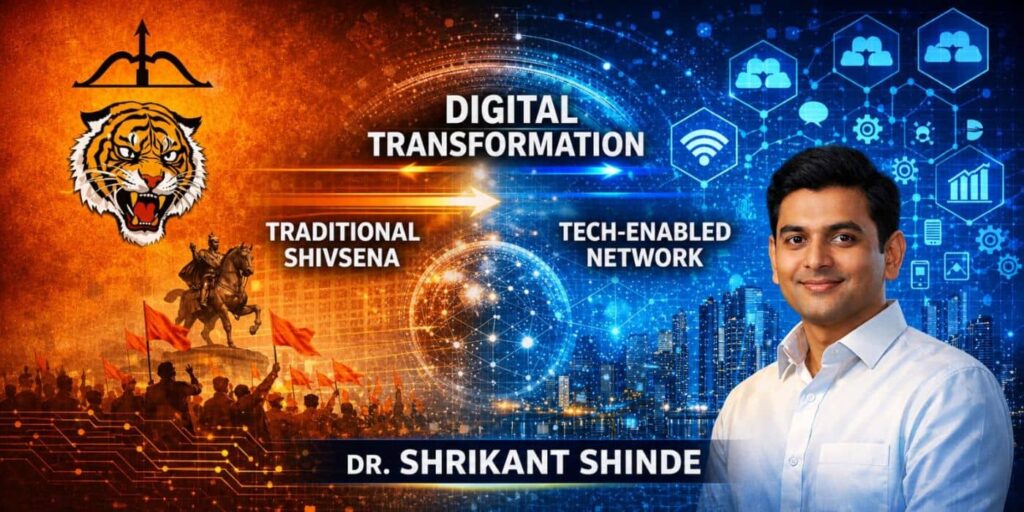
Digital Transformation :
— From Traditional to Modern
Digital transformation brings with it numerous significant benefits. It modernizes the party’s traditional “grassroots” strength, infusing it with data-driven precision and enhanced reach.
In the context of the Shiv Sena
(“Data-Driven Ecosystem” refers to the transformation of traditional grassroots political mobilization into a tech-enabled network where every decision—from candidate selection to booth-level campaigning—is guided by real-time data analysis.
This shift moves the party away from “gut-feeling” politics toward a structured digital environment characterized by:
- Hyper-Local Voter Profiling
The ecosystem creates a detailed map of voters at the booth level. Using digital platforms, party workers (Shiv Sainiks) collect and update data on voter sentiments, caste equations, and local grievances.
This allows leadership to:
Predict voting patterns in specific pockets of Maharashtra.
Identify “swing” voters who can be influenced by targeted messaging.
- Digital Outreach & Sentiment Analysis
Political strategies are now built on Sentiment Analysis. By monitoring interactions on social media platforms like Facebook and Twitter, the party can:
Track Popularity:
Measure real-time reactions to leaders’ speeches or policy stances.
Counter Misinformation:
Deploy fact-based responses quickly through a coordinated digital communication network.
- Integrated Social Media Infrastructure
A critical part of this ecosystem is the use of professional digital assets. For instance, both factions utilize customized digital templates (such as Social Media PSD files) to maintain a consistent brand identity and push impactful campaign creatives across Instagram and Facebook.
- Direct Feedback Loops
The “ecosystem” aspect means that data doesn’t just flow one way. It enables a bottom-up approach where feedback from the lowest level of party workers informs the high-level strategy.
Candidate Selection: Using performance data and local popularity metrics to decide seat sharing.
Issue Targeting: Identifying specific regional issues (like water markets or infrastructure delays) to use as campaign leverage.
This digitization effectively turns the party into a socio-technical network where traditional “Shakhas” (local offices) are augmented by digital tools to ensure every outreach effort is optimized for maximum impact.